
Knowledge, Evidence, And Nurses Clinical Decision-Making In Cardiopulmonary Resuscitation (CPR): An Epistemological Review
Published 2026-04-25
Keywords
- Clinical Decision-Making,
- Knowledge,
- Nurses,
- Cardiopulmonary Resuscitation,
- Epistemological Perspective
Abstract
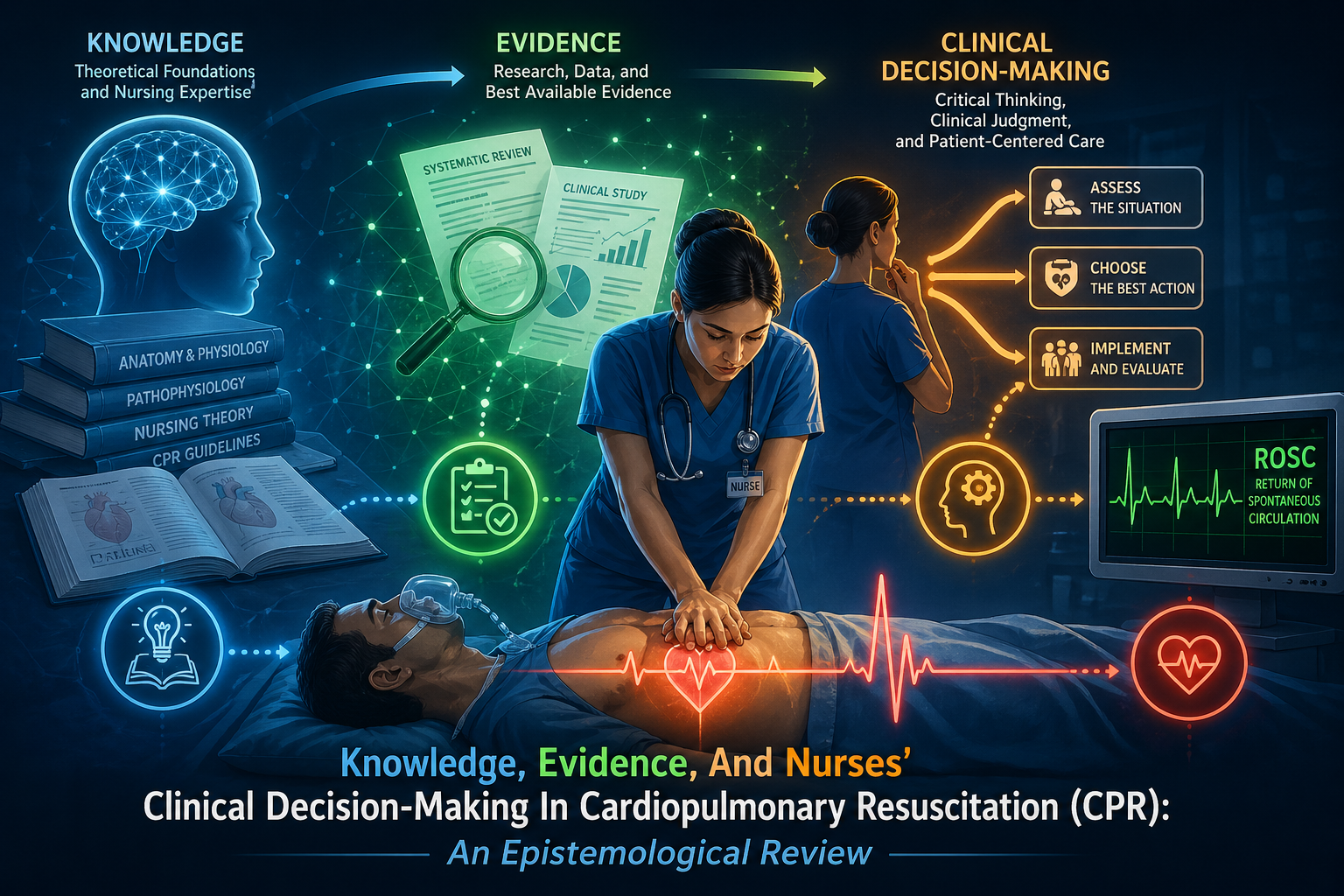
Background: Cardiopulmonary Resuscitation (CPR) is a critical intervention that relies heavily on the quality of high-quality CPR performed by nurses as first responders. Aim: This study aims to analyze the relationship between knowledge, scientific evidence, and clinical decision-making among nurses through an epistemological review. Method: A narrative review was conducted to synthesize evidence on nurses’ knowledge and clinical decision-making in cardiopulmonary resuscitation (CPR). Literature was searched in Google Scholar, PubMed, and ScienceDirect for studies published between 2019 to 2025. Eleven relevant articles were selected through a structured screening process and analyzed using an epistemological perspective. Result: The analysis results indicate that although the majority of nurses possess good standard knowledge (50%-79.1%), a significant gap remains in technical accuracy within the field. This is attributed to clinical decisions being based not only on theoretical (empirical) mastery but also being distorted by external factors such as workload and limited facilities. Conclusion: Successful CPR requires the integration of scientific evidence, clinical experience, and contextual awareness. Transforming passive knowledge into active clinical competence through experiential learning and supportive work environments is essential to improve nurses’ decision-making and resuscitation outcomes.