
The Relationship Between Knowledge and Motivation of Nurses in Conducting Initial Assessments of Trauma Cases in the Emergency Room of Haji Makassar Regional General Hospital
 Andi Budiyanto Adi Putra
Published 2026-04-26
Keywords
- knowladge,
- Motivation,
- Initial assessment,
- Trauma,
- Nurses
Abstract
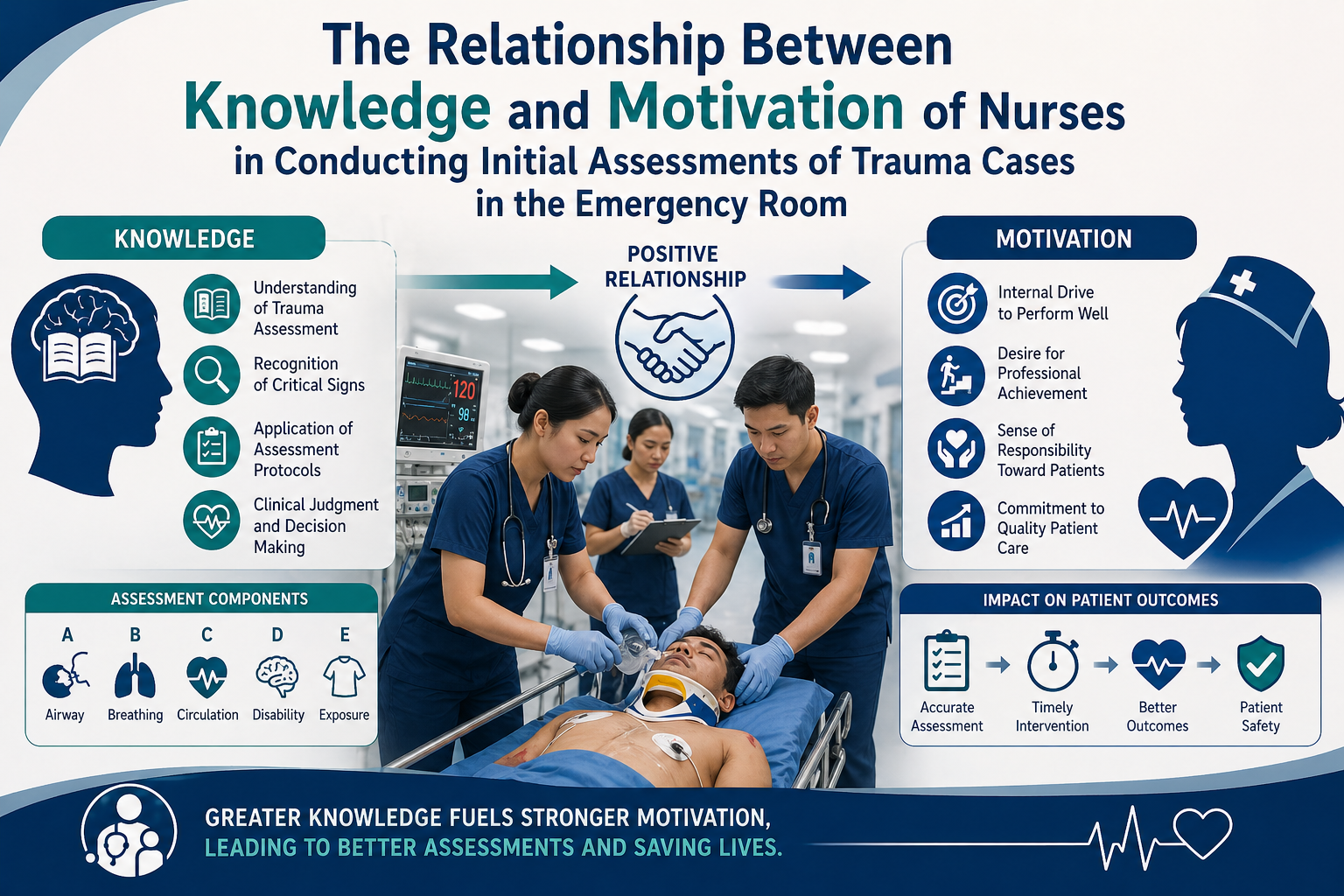
Background: Initial assessment is an important component of emergency nursing care, especially in trauma cases, because it directly affects patient safety, clinical decision-making, and patient outcomes. In emergency departments, especially in low- and middle-income countries, the quality of initial assessment is greatly influenced by the level of knowledge and work motivation of nurses. Objective: This study aims to determine the relationship between nurses' knowledge and motivation in conducting initial assessments of trauma cases in the emergency department of Haji Makassar Regional General Hospital. Methods: This study used a quantitative design with a cross-sectional approach conducted in June–July 2025. The study population consisted of all emergency room nurses at Haji Makassar Regional General Hospital, with a sample size of 35 nurses selected using total sampling technique. Data collection was conducted using a questionnaire that had been tested for validity and reliability. Data analysis used the Spearman Rank correlation test. Results: The results showed that the majority of respondents had good levels of knowledge (60%) and motivation (62.9%) in conducting initial assessments in trauma cases. Furthermore, statistical analysis revealed a significant relationship between nurses' knowledge and motivation (p = 0.001). The correlation coefficient (r = 0.838) indicates a very strong and positive relationship, meaning that the higher the nurses' level of knowledge, the higher their motivation. Conclusion: Improving nurses’ knowledge through continuous education and training can increase motivation and improve the quality of trauma assessment, with institutional support playing an important role in ensuring patient safety and better outcomes.