
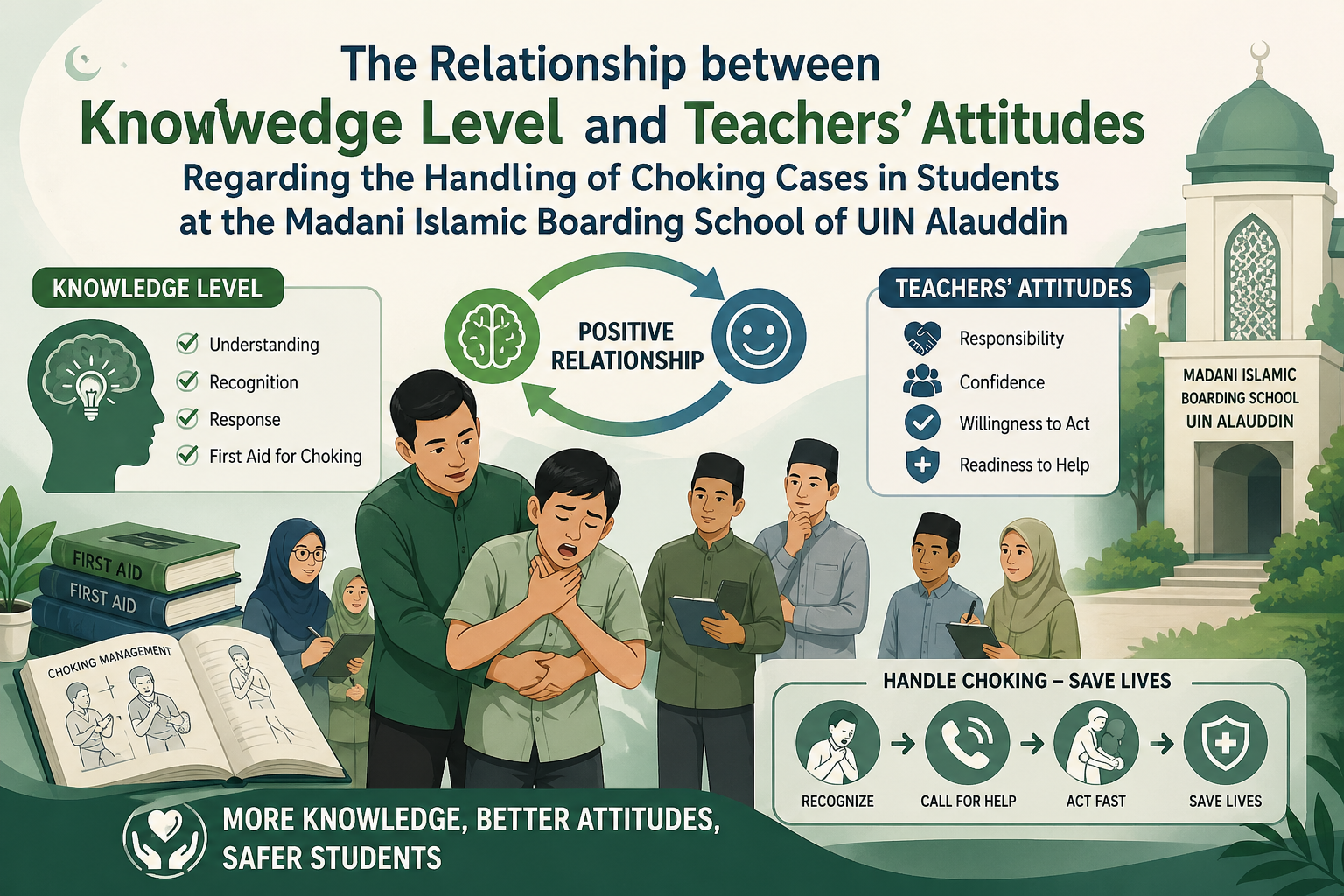
The Relationship between Knowledge Level and Teachers' Attitudes Regarding the Handling of Choking Cases in Students at the Madani Islamic Boarding School of UIN Alauddin
Published 2026-04-26
Keywords
- knowledge,
- attitude,
- choking,
- teachers,
- emergency
Abstract
Background: Choking is a life-threatening emergency that often occurs in school-age children and requires immediate first aid. Teachers frequently become first responders, yet their knowledge and attitudes toward choking management are still limited, especially in low- and middle-income countries. Objective: This study aimed to determine the relationship between teachers’ knowledge and attitudes in managing choking incidents among students. Methods: A quantitative cross-sectional correlational study was conducted involving 34 teachers at Pesantren Madani UIN Alauddin using total sampling. Data were collected using a self-developed questionnaire consisting of knowledge and attitude items related to choking management. The instrument was reviewed for content validity by experts and tested for reliability prior to data collection. Data were analyzed using the Chi-Square test with a 95% confidence level. Results: The majority of teachers had good knowledge (76.5%) and positive attitudes (67.7%). Statistical analysis showed a significant relationship between knowledge and attitude (p = 0.007), indicating that better knowledge is associated with more positive responses in emergency situations. Conclusion: Teachers’ knowledge is significantly related to their attitudes toward choking management. Continuous first-aid education and training are needed to improve school emergency preparedness, with nurses playing an important role in health education and innovation.